


The Engineering NZ (New Zealand) Knowledge Assessment (KA02) for mechatronics engineer is a critical evaluation process for skilled migration purposes and to become chartered professional engineer. This assessment determines whether an overseas engineer possesses a level of technical knowledge equivalent to a New Zealand graduate holding an accredited engineering degree. For mechatronics engineers, this evaluation provides a pathway to secure chartered professional status recognition and support skilled visa applications through New Zealand Immigration.
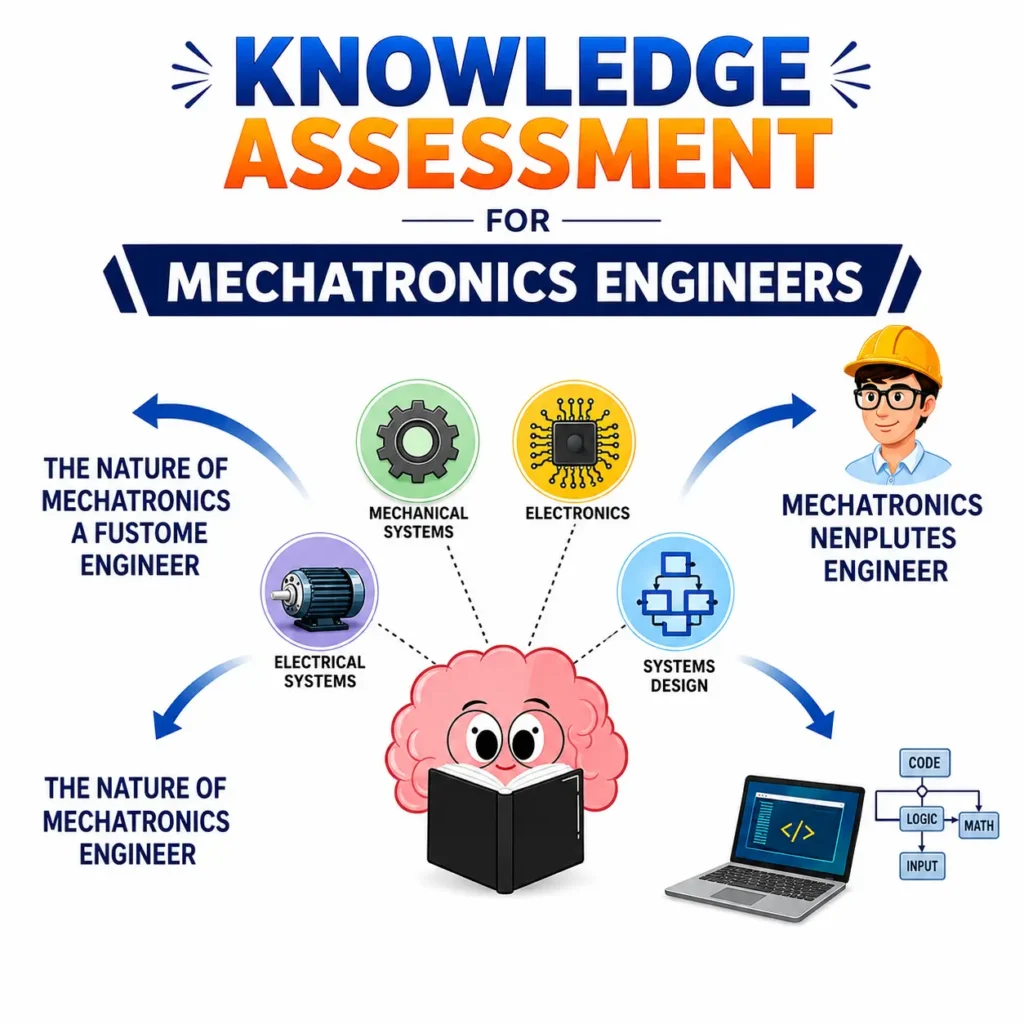
The assessment focuses heavily on the integration of mechanical, electrical, computer, and control systems. Applicants must demonstrate that their educational background and professional practice meet the benchmark standard required to handle complex engineering problems in New Zealand.
Key Knowledge Assessment Pathways
Applicants seeking immigration or registration generally follow distinct evaluation pathways based on where they obtained their qualification.
There are two Knowledge Assessment pathways:
1.) Standard Knowledge Assessment: This option is for all applicants who do not need their application fast tracked for immigration purposes only.
2.) Fast Tracked Knowledge Assessment: This option is only available to applicants who need a Knowledge Assessment letter for immigration purposes.
This pathway is mandatory for applicants whose qualifications originate from non-accord nations or tertiary institutions outside the accredited system. These applicants must submit a Knowledge Assessment 02 (KA02) report.
The KA02 report serves as a technical portfolio where the candidate presents documented evidence of their engineering knowledge. For a mechatronics engineer, this means demonstrating a thorough grasp of cross-disciplinary engineering concepts through academic transcripts, course descriptions, and detailed narratives of project work.
Core Assessment Areas Formulated by Engineering NZ
Engineering NZ utilizes an established framework to evaluate an applicant’s technical capabilities. The assessment checks the applicant’s foundation across eight core elements that align with international educational standards.
| Assessment Element | Mechatronics Engineering Focus Area |
| Natural Sciences | Application of physics and materials science to electromechanical systems. |
| Mathematical Knowledge | Use of advanced calculus, linear algebra, and statistics for system modelling. |
| Engineering Fundamentals | Mastery of core mechanical, electronic, and software engineering concepts. |
| Specialist Knowledge | Expertise in robotics, automated control systems, and instrumentation. |
| Design Process | Systematic development of integrated mechatronic devices or production lines. |
| Engineering Practice | Use of industry-standard simulation tools, programming, and testing equipment. |
| Engineering in Society | Consideration of safety regulations, environmental impacts, and sustainable practices. |
| Research-Based Study | Engagement with technical literature to solve unscripted operational problems. |
Mechatronics engineers must draft comprehensive self-assessment statements for these elements. The responses must outline personal technical contributions, problem-solving methodologies, and the exact engineering principles applied during specific projects.
Documents Required for Mechatronics Engineer Knowledge Assessment
A successful application requires a well-structured compilation of official academic and professional documents. Engineering New Zealand requires these materials to verify the authenticity and depth of the applicant’s background.
- Official graduation certificates and complete academic transcripts.
- Detailed syllabus or course descriptors outlining the specific topics studied during the degree.
- An updated curriculum vitae containing accurate records of employment and project histories.
- A minimum of three to four distinct engineering project reports or work samples.
- Continuing Professional Development (CPD) logs documenting ongoing technical learning.
- Valid government-issued identification, alongside certified English translations for all non-English documents.
Step-by-Step Knowledge Assessment Process
The evaluation process follows a structured sequence through the online portal of the professional body.
- Initial Credential Check: The applicant submits their qualification details. If the body determines that the degree is not automatically recognized under the Washington Accord, the applicant is directed to the KA02 pathway.
- Evidence Gathering: The applicant gathers academic records, designs, calculations, and technical reports from past projects that highlight mechatronics capabilities.
- Drafting Self-Assessment Statements: The candidate writes detailed narratives for each of the eight knowledge elements, referencing the gathered evidence to prove their technical competence.
- Online Submission: The applicant uploads all compiled documents, reports, and identification forms to the official portal and pays the required assessment fee.
- Assessor Review: A panel of professional engineers reviews the portfolio against the set criteria, occasionally requesting additional clarification or supporting evidence before finalizing the decision.
Application Timelines and Costs
The financial and time commitments for the assessment depend on the pathway chosen by the applicant. Processing times are subject to application volumes and the completeness of the initial documentation.
- Standard Knowledge Assessment: This pathway carries an application fee of $1,292.50 NZD. The typical processing window spans approximately 50 working days from the date of submission.
- Fast-Track Knowledge Assessment: For urgent immigration deadlines, applicants can opt for an expedited review. This pathway incurs a higher fee of $1,792.50 NZD, significantly reducing the waiting period to up to 25 working days for an official outcome.